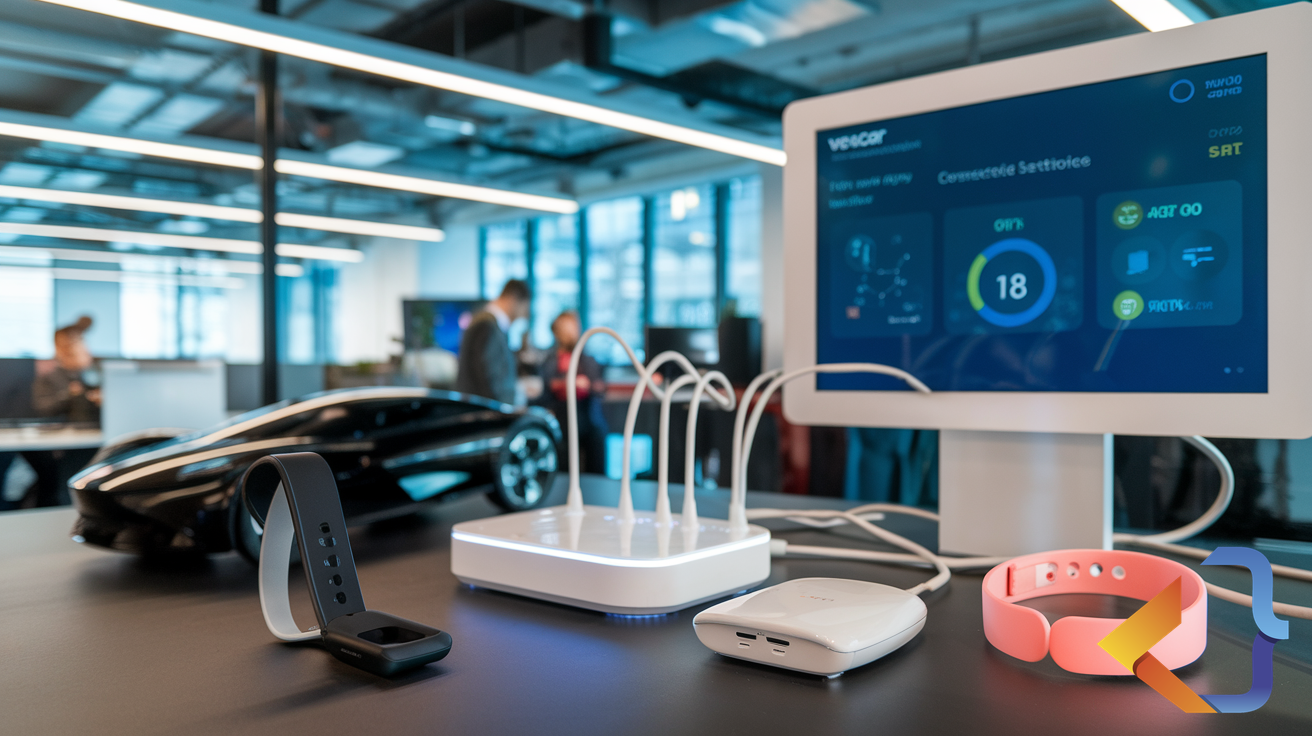

iot Temperature Monitoring for Small Food Businesses
If you run a café, takeaway, or deli, you already know the drill. Every morning, someone grabs a clipboard, walks to the fridge, scribbles down a number, and files it away in a folder that nobody looks at until an environmental health inspector turns up. It works — just about. But what happens at 2am when the fridge door doesn’t close properly and everything inside reaches an unsafe temperature? You won’t find out until the morning, and by then, the damage is done. That’s exactly the problem that IoT temperature monitoring for small food businesses is designed to solve. IoT stands for Internet of Things — it simply means everyday devices that connect to the internet and share information automatically, without you having to do anything manually.
This guide explains, in plain English, how connected temperature sensors can replace your paper logs, keep you food safety compliance technology ready, and give you genuine peace of mind — even while you’re at home asleep.
Why Paper Temperature Logs Are Letting Your Business Down
Picture this: it’s a Tuesday afternoon in a busy sandwich deli in Leeds. The member of staff responsible for the temperature log is rushed off their feet. They jot down a number without actually checking the thermometer properly — or worse, they forget altogether. This isn’t laziness; it’s just the reality of a hectic food service environment. And it’s surprisingly common.
The problem is that paper logs are entirely reactive. They tell you what the temperature was at a specific moment in time, not what it’s been doing in between checks. A fridge could run warm for three hours and cool back down before anyone notices. The Food Standards Agency (FSA) requires food businesses to keep accurate records as part of their food safety management system — and a patchy paper log won’t impress an inspector.
Beyond compliance, there’s the very real cost of spoiled stock. A fridge running a few degrees too warm overnight could mean throwing away hundreds of pounds worth of produce before the morning rush. That’s a painful hit for any independent food business. Automated temperature logging for catering removes the human error from the equation entirely, recording temperatures continuously and storing them digitally — ready to show any inspector at a moment’s notice.
The good news is that switching to an automated solution doesn’t require you to be remotely technical. If you can use a smartphone, you already have all the skills you need.
How IoT Temperature Monitoring Actually Works (In Plain English)

Forget the jargon. Here’s the simple version. A small wireless sensor — about the size of a matchbox — sits inside your fridge or freezer. It measures the temperature continuously throughout the day and night. That reading is sent automatically, via your Wi-Fi or a mobile network signal, to a secure online dashboard that you can view on your phone or computer. No wires. No manual input. No clipboards.
The sensor is always on. It logs a temperature reading every few minutes and stores every single one in a digital food hygiene records UK compliant format. If the temperature goes outside a safe range — say, above 5°C for a chilled fridge — you receive an instant notification on your phone. That’s what’s known as a real-time equipment alert: a message sent the moment something needs your attention, rather than hours later when the problem has already escalated.
Platforms like VeCar’s IoT Platform are built to make exactly this kind of connected monitoring accessible to businesses of any size, without requiring a dedicated IT person or any specialist knowledge. The platform manages all the complexity behind the scenes — all you see is a clear, easy-to-read temperature history and an alert if something goes wrong.
This kind of remote fridge monitoring UK capability is no longer something reserved for large supermarket chains. In 2026, it’s well within reach of independent food businesses with modest budgets.
Five Ways IoT Temperature Monitoring Helps Your Food Business
Still wondering whether this is the right move for your café or takeaway? Here are five concrete ways that connected temperature monitoring makes a tangible difference — none of which require you to have any technical background.
Continuous, automatic record-keeping. Instead of manual checks two or three times a day, your sensor logs a temperature reading every few minutes, around the clock. When an environmental health officer visits, you can pull up months of digital food hygiene records UK compliant data instantly — no digging through folders, no gaps in the log.
Instant alerts when temperatures go wrong. If your cold room drifts above the safe threshold at any hour, you get a notification straight to your phone. These real-time equipment alerts in hospitality settings mean you can act immediately — call a member of staff, arrange an emergency repair, or move stock to a backup fridge — before a small issue becomes a costly one.
Proof of compliance without the paperwork. Registered food businesses in the UK must demonstrate that they manage food safety risks effectively. Digital logs generated automatically by a sensor are timestamped and tamper-evident, which makes them far more credible evidence of compliance than a handwritten sheet.
Reduced stock loss and waste. Catching a fridge fault early — at midnight, for example — gives you the chance to intervene before an entire shelf of stock is lost. For a small deli or café, avoiding even one such incident a year could easily recoup the cost of the sensor several times over.
Peace of mind when you’re not on the premises. One of the biggest stresses of running a food business is not being able to be everywhere at once. Remote fridge monitoring UK-wide means you can check the temperature of every piece of equipment from your phone, whether you’re at a supplier visit or at home with your family. That kind of visibility is genuinely reassuring.
Each of these benefits is available through food safety compliance technology that requires no specialist installation in most cases — sensors are typically wireless and battery-powered, meaning you simply place them where needed and connect them to your platform.
A Real-World Example: A Takeaway in Birmingham

Imagine you run a family-owned Indian takeaway in Birmingham. You have two fridges and a walk-in cold room. Currently, one of your staff members logs temperatures on paper twice a day — once at opening and once at closing. On a quiet Tuesday evening, the walk-in cold room door is left slightly ajar after a delivery. By midnight, the temperature inside has crept up to 9°C — well above the 5°C maximum recommended by the FSA.
Without IoT temperature monitoring for small food businesses, you’d have no idea until Wednesday morning, when staff arrive to find the stock is borderline. You’d face a difficult decision about whether to use or discard it, and a potentially expensive restocking run before lunchtime service.
With a connected sensor in place, you’d receive a notification on your phone at 12:15am — while the problem is still recoverable. You ring the night manager, the door is properly closed, and the temperature returns to normal within the hour. The digital log shows the brief excursion and your corrective action. If an inspector ever asks, you have a complete, honest record.
That’s not a hypothetical benefit. It’s a straightforward, practical outcome that automated temperature logging for catering businesses delivers every single day across the UK.
What About Food Safety Regulations in the UK?
It’s worth understanding what the law actually requires, so you know exactly how this technology helps you stay on the right side of it. The Food Hygiene (England) Regulations 2006 require food businesses to implement and maintain a food safety management system based on the principles of HACCP — which stands for Hazard Analysis and Critical Control Points. In practice, that means identifying risks (like equipment failure), monitoring them consistently, and keeping records to prove you’re doing so.
Temperature control is one of the most critical parts of any HACCP-based plan. Digital food hygiene records UK businesses generate through IoT sensors satisfy this requirement automatically. The records are continuous, timestamped, and stored securely — far superior to a paper log that might have gaps or inconsistencies.
Environmental health officers increasingly recognise and appreciate digital evidence. A business that can demonstrate automated, gapless temperature logging is sending a clear signal that it takes food safety seriously. That matters enormously when your Food Hygiene Rating is at stake. The FSA’s Food Hygiene Rating Scheme is publicly visible, and a high rating builds genuine trust with customers.
Investing in food safety compliance technology is therefore not just about avoiding fines or failed inspections — it’s a direct contribution to your reputation and your customer confidence.
Is This Expensive or Complicated to Set Up?
This is the question most independent food business owners ask first — and it’s a fair one. The honest answer is that it’s more affordable and straightforward than you might expect.
Wireless temperature sensors are widely available and most require no professional installation. You place the sensor in or near the equipment you want to monitor, connect it to your Wi-Fi (or in some cases, it uses its own mobile signal), and register it with your chosen platform. Initial setup typically takes under an hour, and most platforms are designed to be used via a simple smartphone app or web dashboard — no technical knowledge required.
Costs vary depending on how many sensors you need and which platform you choose. As a rough guide, a basic setup covering two or three pieces of equipment is realistically achievable for a modest monthly subscription, making it accessible even for small independents. When you weigh that against the cost of a single stock loss incident or a poor hygiene rating, the case is straightforward.
If you’d like to understand how an IoT platform like VeCar’s can be configured specifically for your business, our team is happy to walk you through it with no pressure and no jargon. You can also explore our IoT Platform overview to get a sense of what’s possible.
For further reading on how connected technology is reshaping small businesses, The Guardian’s small business Network regularly covers practical digital adoption topics that are worth exploring.
Next Steps: What You Can Do Today
You don’t need to overhaul everything at once. Here’s one concrete action you can take today: count how many fridges, freezers, or cold storage units your business relies on, and write down which ones would cause the most disruption if they failed overnight. That list is your starting point for a temperature monitoring plan.
Then, get in touch with VeCar Digital Programming. We’ll help you understand which sensors make sense for your setup, how to connect them to a platform that generates digital food hygiene records automatically, and how to make sure the whole thing is running before your next environmental health visit. No technical background required on your part — that’s our job.
IoT temperature monitoring for small food businesses is one of those rare upgrades that genuinely pays for itself — in reduced waste, better compliance, and the kind of confidence that comes from knowing your equipment is being watched, even when you’re not there.
Ready to move away from the clipboard for good? Explore VeCar’s IoT Platform or get in touch with our team today. We’re here to help UK food businesses like yours use technology practically, affordably, and without the headache.
Frequently Asked Questions
Do I need technical skills to set up IoT temperature monitoring in my café or takeaway?
No technical skills are required. Modern IoT temperature sensors are designed for small business owners, not IT professionals. Most systems involve plugging in a sensor, downloading an app, and connecting to your existing Wi-Fi. Setup typically takes under 30 minutes. Suppliers often provide plain-English guides and UK-based customer support to help you get started quickly.
Will IoT temperature monitoring help me pass a UK food hygiene inspection?
Yes. Automatic digital temperature logs demonstrate due diligence to Environmental Health Officers, replacing unreliable paper records. The system timestamps every reading, creating a clear audit trail. This directly supports compliance with UK Food Safety Management procedures (HACCP), which inspectors assess during hygiene ratings visits. Consistent, accurate logs can strengthen your food hygiene rating.
What happens if my fridge temperature goes out of safe range overnight?
IoT sensors send instant alerts via SMS or app notification when temperatures exceed safe thresholds — even at 3am. This allows you to act before stock spoils, potentially saving hundreds of pounds in wasted food. You can set custom alert limits and nominate multiple staff members to receive notifications, ensuring someone always responds promptly.
How much does IoT temperature monitoring typically cost for a small food business?
Entry-level systems suited to small cafés, delis, or takeaways typically start from £50–£150 per sensor, plus a monthly subscription of £5–£20 for cloud storage and alerts. Costs vary by provider and features. When weighed against potential stock losses, fines for non-compliance, or poor hygiene ratings affecting trade, most small businesses recover the investment quickly.
Can one IoT system monitor multiple fridges and freezers across my premises?
Yes. Most IoT temperature monitoring platforms allow you to connect multiple sensors to a single dashboard, covering all your refrigeration units simultaneously. You can label each unit, view readings in real time, and receive separate alerts per appliance. This is especially useful for delis or takeaways with several fridges, walk-in coolers, or display cabinets.