
Connected Devices for small business Premises UK
What if you could check on your business premises from your sofa at 9pm — and actually do something about it if there was a problem? In 2026, that is not a pipe dream. Connected devices for small business premises UK are making exactly that possible, and you do not need a degree in computing to use them. This guide explains, in plain English, which connected devices solve real operational headaches for sole traders and small business owners who manage a physical space without an in-house IT team.
Whether you run a beauty salon, a high-street accountancy practice, an independent shop, or a small office, there is something here that will make your life a great deal easier. Let us get into it.
What Are Connected Devices and Why Should You Care?
Connected devices — sometimes called iot devices, where IoT simply means Internet of Things — are everyday pieces of equipment that can send and receive information over the internet. Think of a thermostat that you can adjust from your phone, or a door lock that lets you know when someone has entered your premises. The Internet of Things is, at its heart, about giving ordinary objects the ability to communicate.
For a small business owner, this matters because it means you can keep an eye on your premises, your equipment, and your energy consumption without physically being there. You gain visibility and control that previously only large corporations with dedicated facilities teams could afford. The cost of connected hardware has dropped considerably in recent years, making this genuinely accessible for businesses of all sizes across the UK.
The VeCar IoT Platform is designed precisely for this situation — a comprehensive, scalable, and secure solution that connects your devices, collects the data they produce, and puts it somewhere you can actually understand and act on it. No jargon. No IT department required.
Which Connected Devices Actually Help Small Business Owners?
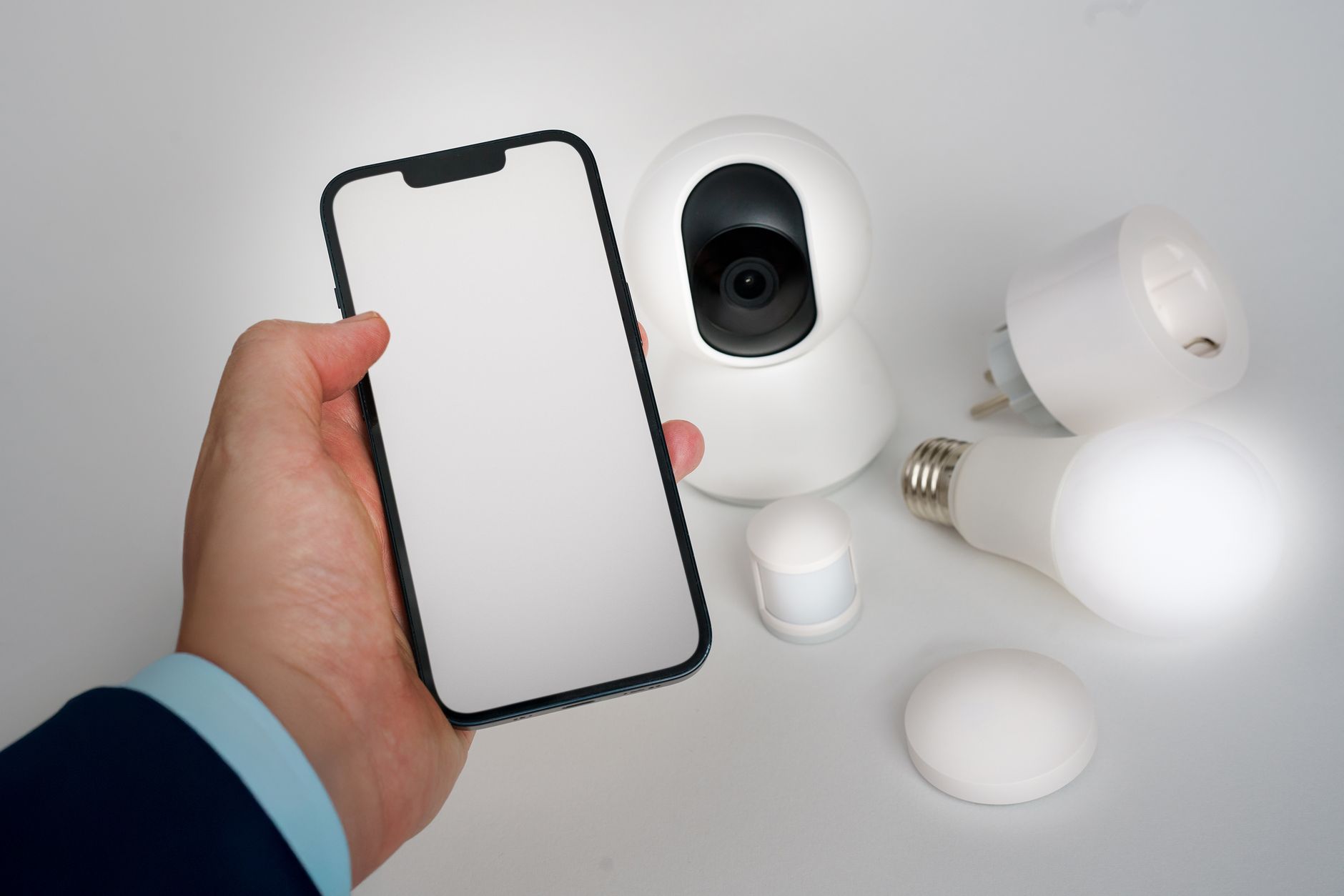
Here is where we get practical. Below is a rundown of the connected devices most relevant to UK small businesses managing physical premises. Each one addresses a specific, everyday problem.
- Remote premises management cameras and environmental sensors — These are small devices fitted around your property that report conditions such as movement, temperature, humidity, or unexpected entry back to a central dashboard. Imagine you run a beauty salon in Bristol. You finish a long Saturday and drive home, then wonder whether you left the back door unlocked. With a connected sensor on that door, you can check from your phone in seconds — and lock it remotely if needed. Remote premises management like this removes an enormous amount of low-level anxiety from the working day.
- Energy usage tracking for small businesses — Smart energy monitors (small devices fitted to your electricity or gas supply) measure exactly how much power each area or piece of equipment is consuming. Energy usage tracking for small businesses helps you identify waste quickly. For example, if your office air conditioning is running overnight because someone forgot to switch it off, you will see that spike in your data the next morning. The UK government actively encourages businesses to improve energy efficiency, and connected monitors make it far simpler to act on that.
- Automated door access control UK — Electronic keypads and smart locks replace physical keys with codes, key fobs, or even smartphone-based entry. Automated door access control UK means you can grant a member of staff temporary access on a specific morning without cutting a key, and you can revoke that access instantly if circumstances change. For an accountant with a high-street office, this is particularly valuable during tax season when extra staff may come and go. You always know who entered and when.
- Equipment uptime monitoring — Connected sensors can be attached to critical equipment — a salon’s colour-processing unit, a retailer’s chilled display cabinet, or a solicitor’s document scanner — to track whether each item is performing within normal parameters. Equipment uptime monitoring means you receive a notification before a fault becomes a full breakdown, giving you time to arrange a repair rather than scrambling on the day. Unplanned downtime is one of the most disruptive and expensive things that can happen to a small business.
- Real-time alerts for business property — Perhaps the most immediately useful feature of a connected premises setup is the alert system. Real-time alerts for business property can notify you by text or app notification if a door is opened outside of opening hours, if a temperature sensor detects something unusual, or if a piece of equipment stops drawing power unexpectedly. You respond to the situation rather than discovering it hours later.
- Water leak detectors — Small, inexpensive sensors placed near sinks, dishwashers, or pipework detect moisture and alert you immediately. A leak discovered at 11pm costs far less to fix than one found the following morning after hours of damage. For any business with a kitchen, utility room, or multiple floors, these are worth every penny.
These are not futuristic gadgets. They are practical tools available in the UK right now, and the VeCar IoT Platform is built to bring them all together in one place so you are not juggling five different apps on your phone.
A Closer Look at Remote Premises Management
Have you ever driven back to your premises unnecessarily because you were not sure whether you had switched something off? Most small business owners have. Remote premises management using connected devices eliminates that wasted journey and the stress that goes with it.
The concept is straightforward. Sensors and cameras around your property feed data to a secure online platform. You log in — from your phone, tablet, or laptop — and see the current status of your premises at a glance. Is the building secure? Are the lights off? Is the heating set correctly for the time of day? All of that is visible and, where possible, controllable remotely.
For an independent retailer in, say, Leeds or Edinburgh, this kind of oversight is transformative. You might have a small team and split your time across deliveries, supplier calls, and serving customers. Remote premises management means you are never entirely out of the loop, even when you cannot physically be there. Which? has a helpful overview of how smart devices work in practice if you want a consumer-friendly introduction before diving in.
The VeCar IoT Platform handles the infrastructure — the secure data connections, the management layer, the dashboards — so you do not have to build any of that yourself. You simply connect your devices and start seeing the information.
Energy Usage Tracking for Small Businesses: Where the Savings Are

Energy costs are one of the largest controllable overheads for UK small businesses. Yet most owners have only a vague idea of where their energy actually goes. Energy usage tracking for small businesses changes that by giving you precise, real-time data.
Consider a small accounting practice with a high-street office. The team leaves at 5:30pm. But the printer is left on standby, the server room runs all night, and the heating has been set to a schedule that nobody has updated since the business moved in. A connected energy monitor would show each of these clearly, allowing the practice manager to make informed decisions — not guesses — about where to cut back.
BBC Business regularly covers the pressure rising energy prices place on UK small businesses. Connected monitoring is one of the most direct responses available. Even modest reductions in wasted energy — turning off equipment that idles overnight, adjusting heating schedules by an hour — can add up to hundreds of pounds saved per year across a small premises.
The VeCar IoT Platform can aggregate energy usage tracking for small businesses data alongside your other device feeds, giving you a single view of your operational health rather than a separate app for each function.
Automated Door Access Control UK: Security Without the Hassle
Physical keys are a genuine liability for small businesses. They get lost, copied, and forgotten. When a member of staff leaves, you are supposed to get your key back — but that does not always happen. Automated door access control UK solves this cleanly.
Modern access control systems range from straightforward keypad entry to app-based smart locks and proximity fob systems. Each one logs who enters and when. You can add or remove access for an individual without changing locks or cutting new keys. For a salon owner who employs freelancers on different days, or a solicitor who occasionally hosts visiting consultants, this flexibility is genuinely valuable.
The UK government publishes guidance on small business security that highlights access control as a priority area. Connected access systems make compliance with that guidance far more straightforward. And because they integrate with the VeCar IoT Platform, access events can trigger other actions — such as switching lights on automatically when the first person arrives in the morning.
You also have a clear audit trail. If a question ever arises about who was on the premises at a particular time, you have the data. That kind of record-keeping used to require dedicated security systems costing tens of thousands of pounds. Today it is accessible to a sole trader running a single office.
Equipment Uptime Monitoring: Catch Problems Before They Cost You
What would it cost your business if a critical piece of equipment failed on your busiest day of the week? For most small business owners, the answer is — quite a lot. Equipment uptime monitoring via connected sensors gives you advance warning so you can act before a fault becomes a crisis.
The principle is simple. A sensor attached to a piece of equipment (or monitoring the power supply to it) tracks operating patterns over time. If something starts behaving unusually — drawing more power than normal, running hotter, cycling on and off more frequently — the platform flags it. You get a notification. You call your maintenance provider before the equipment fails entirely.
For a salon owner, that might be a hairdryer bank or a steriliser unit. For a small retailer, it could be a chilled display cabinet. For a solicitor’s office, it might be the server or the document management system. Equipment uptime monitoring is not about watching machines for the sake of it — it is about protecting your ability to serve your clients without interruption. Forbes Technology Council has noted that predictive maintenance enabled by IoT sensors is increasingly seen as a key competitive advantage, even at small business scale.
You can also learn from the data over time. If a particular piece of equipment consistently underperforms on certain days or in certain conditions, you can investigate and address the root cause rather than repeatedly reacting to the same problem. That shift — from reactive to proactive — is one of the most valuable things connected devices bring to a small business.
Real-Time Alerts for Business Property: Peace of Mind, Wherever You Are
Perhaps the most immediately satisfying benefit of a connected premises setup is simply knowing that you will be told if something goes wrong. Real-time alerts for business property mean that problems do not quietly grow overnight while you are unaware.
An alert might tell you that the back door of your shop has been opened at 2am. It might tell you that the temperature in your server room has risen above a safe threshold. It might flag that a water sensor has detected moisture near the boiler. In each case, you find out immediately — not the following morning when the damage is already done.
This matters particularly for sole traders who are the only person responsible for their premises. You do not have a facilities manager or a night security team. Real-time alerts for business property act as your always-on monitoring layer. You set the thresholds that matter to you, and the platform does the watching. You can also learn more about how the VeCar IoT Platform supports small businesses across a range of industries on our blog.
How Does the VeCar IoT Platform Bring This Together?
Individual connected devices are useful on their own. But the real power comes when they are all managed through a single, coherent platform. The VeCar IoT Platform is designed to connect, manage, and analyse data from multiple devices across your premises — and to present that information in a way that is genuinely useful rather than overwhelming.
You do not need to be a developer or a network engineer to use it. The platform is built to be scalable, so it works whether you have three connected devices or thirty. It is also built with security as a priority — your data is protected and your access is controlled, which matters greatly when you are dealing with premises security and access management. You can read more about data security for small businesses in our dedicated guide.
The platform grows with your business. If you start with energy monitoring and later add access control and equipment sensors, everything integrates into the same dashboard. That consistency saves you time and reduces the learning curve as you expand your connected setup.
Next Steps: What You Can Do Today
If you manage a physical business premises in the UK and you have been relying on guesswork, luck, or last-minute panic to keep things running smoothly, connected devices for small business premises UK offer a genuinely better way forward.
Here is one concrete action you can take right now: write down the three biggest operational headaches you face in managing your premises. Is it energy waste? Security worries? Equipment reliability? Identifying your top three will help you have a focused, productive conversation about which connected devices would make the most immediate difference to your business.
At VeCar Digital Programming, we help UK small business owners get the most from technology without needing to understand every technical detail themselves. If you are curious about how connected devices for small business premises UK could work for your specific situation, get in touch with our team today. We will give you a straight, honest assessment — no jargon, no pressure, and no unnecessary complexity. Explore what the VeCar IoT Platform can do and take the first step towards a premises that practically looks after itself.
Frequently Asked Questions
What connected devices are most useful for small business premises in the UK?
The most practical connected devices for UK small businesses include smart thermostats, occupancy sensors, smart lighting systems, leak detectors, and energy monitoring plugs. These tools help reduce utility bills, improve security, and allow remote management via smartphone apps. Choosing devices compatible with a central hub or platform ensures seamless integration and easier oversight across your entire premises.
How can connected devices help reduce energy costs for small business owners?
Connected devices monitor real-time energy consumption, automatically adjusting heating, cooling, and lighting based on occupancy or schedules. Smart thermostats alone can cut heating bills by up to 30%. Energy monitoring plugs identify power-hungry equipment, enabling informed decisions. For UK businesses facing rising energy prices, these savings can significantly improve operational margins over time.
Can I manage connected business devices remotely if I’m not on-site?
Yes. Most modern connected devices use cloud-based apps, allowing you to monitor and control heating, lighting, security cameras, and alarms from any location via smartphone or tablet. This is particularly valuable for small business owners managing multiple sites or working remotely. Reliable broadband and secure Wi-Fi are essential prerequisites for effective remote management.
How do connected devices help prevent costly equipment breakdowns in business premises?
Smart sensors can detect early warning signs such as unusual temperature fluctuations, water leaks, or abnormal power consumption that indicate equipment stress. Automated alerts notify you immediately, enabling preventative maintenance before minor issues escalate into expensive repairs or business downtime. This proactive approach is far more cost-effective than reactive emergency callouts.
Are there UK regulations or compliance considerations when installing connected devices in business premises?
Yes. UK businesses must ensure connected devices comply with GDPR if collecting data, particularly for CCTV or occupancy tracking. Electrical installations must meet BS 7671 wiring regulations. Additionally, devices processing personal data require a clear privacy policy. Always use CE or UKCA-marked products and consult a qualified electrician before installation to meet building and safety standards.