

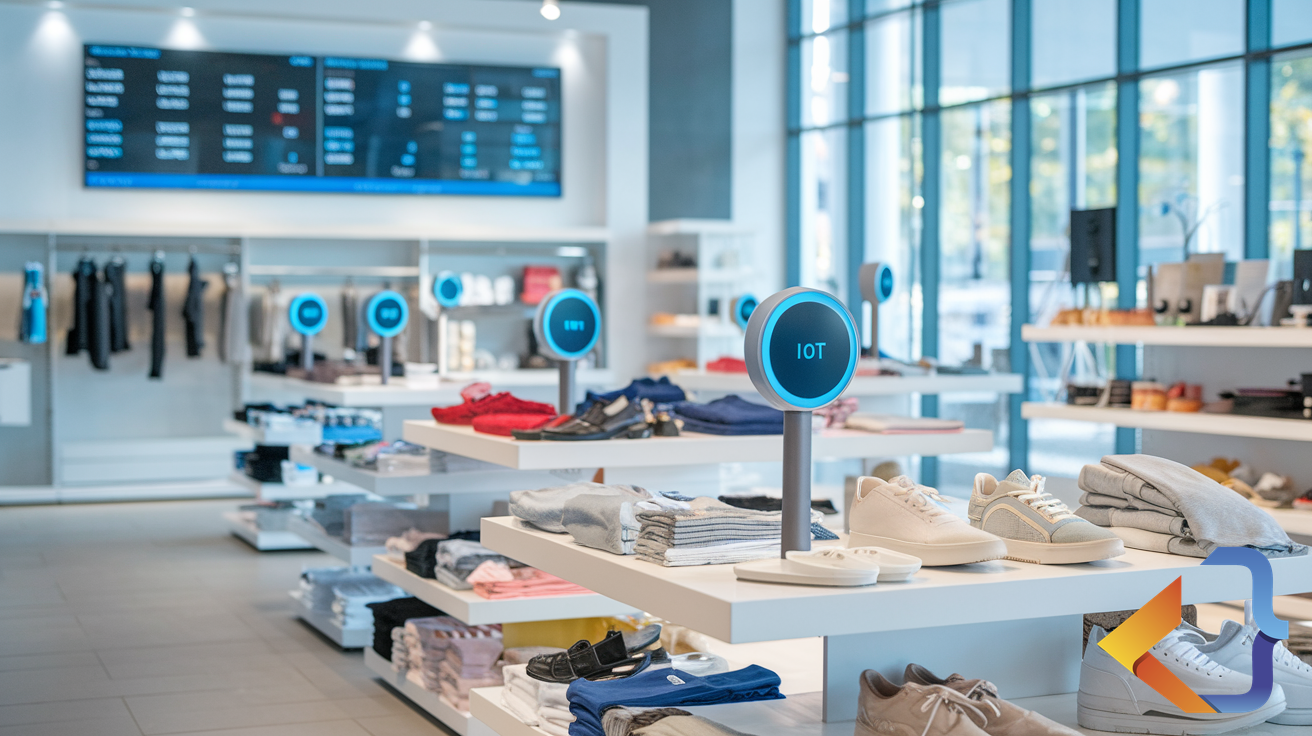
How Retail Shops Use iot Sensors to Track Stock
Picture this: it’s a Saturday afternoon, your shop is busy, and a customer asks for your bestselling item. You’re sure you have it in stock somewhere. But after a ten-minute search, you discover you’re out. The customer leaves disappointed, and you’ve lost a sale. You also missed the chance to reorder before the shelf went empty.
This happens to countless independent retail owners every week. Manual stock checking is time-consuming, error-prone, and it often happens too late. How to use IoT sensors in retail is no longer a question just for big supermarket chains. Affordable, easy-to-install sensors are now within reach for small shops, and they can transform the way you manage inventory.
In this guide, we’ll walk you through exactly which sensors work, how they help, and what they’ll cost you. By the end, you’ll have a clear picture of whether this approach makes sense for your business.
What Are IoT Sensors, and Why Do Retail Owners Care?
IoT stands for Internet of Things. In plain terms, it means small electronic devices that collect information and send it to you over the internet. In a retail setting, these sensors sit on or near your shelves and tell you what’s there—without you having to walk around with a clipboard.
Why does this matter? Because you spend less time on tedious stock checks and more time helping customers or running other parts of your business. You also spot gaps on shelves faster, which means fewer lost sales from items being out of stock.
Imagine you run a hardware shop in Bristol with 200 different products spread across four aisles. Right now, you manually check stock twice a week. With sensors, you get a live picture on your phone. You’ll know the moment something runs low, and you can reorder before customers notice it’s gone.
Five Types of Affordable IoT Sensors for Retail Stock Tracking

Not all sensors are equal, and you don’t need every type. Here are the most practical options for small retail shops, along with what each one does and roughly what you’ll pay.
Weight-based sensors (load cells)
These sit underneath a shelf or product tray and measure how heavy what’s on top is. If your bestselling chocolate bar weighs 50 grams and you normally stock 100 of them, the sensor knows when that weight drops by half. They’re simple, reliable, and cost between £30 and £150 per unit depending on the brand. Ideal for shops with high-turnover items of consistent weight.Motion sensors (PIR detectors)
These detect when someone walks past a shelf or picks something up. They’re very affordable (£15 to £50 each) and useful for spotting whether a shelf is being browsed heavily. They won’t tell you exact numbers, but they’ll alert you if an area goes quiet unexpectedly—which often means stock is low. Great as a budget-friendly first step.RFID tags and readers
RFID stands for Radio-Frequency Identification. You attach a tiny tag to each product. When it passes by a reader (placed at the shelf, checkout, or stockroom door), the reader logs the movement. This gives you precise counts. The downside: it’s more involved to set up, and you need tags on every item. Costs range from £0.50 per tag to several hundred for the reader hardware. Better for shops with smaller product ranges or high-value items.Camera-based vision systems
Modern cameras with AI can literally see whether a shelf is full or empty. They’re increasingly affordable and very accurate. A basic system costs £200 to £800 to install. They work well for visual inventory checks and can even flag expired or misplaced items. The trade-off is they need clear sightlines and decent lighting.Ultrasonic distance sensors
These measure the distance between the sensor and the products on a shelf. If your shelf normally has items up to 30 centimetres deep and that suddenly drops to 10 centimetres, the sensor knows stock is low. They cost £20 to £80 per unit and work particularly well for deep shelves with bulk items. They’re less useful for thin shelves with varied product depths.
Retail IoT Cost Savings: What You Actually Save
Let’s talk money. You’re investing in sensors, so you want to know what the payoff is.
The biggest saving comes from preventing stockouts. Every time a customer finds an empty shelf where they expected an item, you lose that sale. Industry figures suggest a typical small shop loses 2–5% of potential revenue to stockouts. If you run a £500,000 annual turnover shop, that’s £10,000 to £25,000 in lost sales each year.
Smart shelf monitoring also cuts down on wasted time. A shop owner spending two hours a week on manual stock checks is spending over 100 hours a year on it. At even modest labour value, that’s thousands of pounds. Sensors cut that to perhaps 30 minutes a week because you’re checking on exceptions (low stock) rather than doing a full count.
You also order smarter. Without real-time data, you guess, and you often order too much or too little. Too much ties up cash on shelves. Too little creates gaps. With inventory tracking with sensors, you order just in time—the right amount, the right moment. Over a year, this can shave 10–15% off tied-up stock costs.
A small independent pharmacy in Manchester installed weight sensors on five high-turnover shelves for about £800 total. Within six months, the owner reported fewer stockouts, less overstocking, and about eight hours a week back in their schedule. At their volume, they reckoned they’d saved roughly £3,500 in the first year through reduced shrinkage and better ordering.
How to Start: A Step-by-Step Approach

Step 1: Identify your problem shelves
Don’t sensor your whole shop at once. Pick two or three shelves where you know stockouts happen frequently, or where you waste time checking manually. A fashion boutique might sensor the top-sellers. A convenience shop might pick the milk, bread, and coffee shelves.
Step 2: Choose your sensor type
Based on what those shelves hold, pick the sensor that fits. Is it consistent weight (weight sensor)? Different products (camera or RFID)? Quick budget start (motion sensor)? Don’t overthink this. Start with one type.
Step 3: Pick a platform
You’ll need software to see the data. Many sensor companies bundle it in—a simple app or web dashboard. Look for something with a clean layout (you shouldn’t need training) and alerts you can set (e.g., ‘notify me when stock on Shelf 2 drops below 20 units’). Popular options include Shopify’s inventory apps, or stand-alone platforms like Zoho Inventory or TrackStock. Costs range from free (basic) to £50–£200 a month depending on features.
Step 4: Install and calibrate
Most sensors come with straightforward setup instructions. You’ll place them, connect them to your shop’s Wi-Fi, and teach the platform what ‘full’ and ’empty’ look like for that shelf. It takes an hour or two, often less.
Step 5: Set your alerts
Dec ide which low-stock levels should trigger a notification to you or your staff. This is where the real benefit kicks in: you find out about gaps before customers do.
Reducing Stockouts: The Real Win
An empty shelf is invisible profit walking out the door. Reducing stockouts retail is the core reason most small business owners invest in sensors, and it’s the most measurable win.
When you know in real time what’s running low, you can reorder faster. You can also train staff to spot gaps quickly. Some shops even use alerts to move faster-moving items from the stockroom to the shop floor on high-traffic days.
One salon owner in Leeds used simple motion sensors near her retail shelves (haircare products). The sensors flagged which areas got the most browser traffic. She rearranged stock to match demand and increased her retail add-on sales by 12% in three months. She didn’t add more stock; she just put the right items where customers were already looking.
The psychological boost matters too. You’ll sleep better knowing you’re not leaving money on the table because of avoidable stockouts. Your customers see shelves that are regularly full and well-maintained, which builds confidence in your shop.
Common Concerns (and Honest Answers)
Won’t sensors be too complicated for my staff?
Not if you pick the right ones. A simple app notification is easier than a manual checklist. Most staff learn it in a day.
What if my internet connection drops?
Good sensors cache data locally and sync when your connection is back. You won’t lose any readings.
Is it worth it for a small shop?
It depends on your turnover and how much stock waste you have now. If you’re losing £50 a week to stockouts and staff time, sensors at £50–100 a month will pay for themselves in under a year. If you’re stable, the payoff is slower.
What about privacy?
Unlike camera systems, most physical sensors (weight, motion, RFID) collect no personal data. If you use cameras, be clear with customers—a simple notice on the door is standard practice.
What You Can Do Today
You don’t need to commit to a full system right now. Here’s what to do this week:
- Walk your shop and list the three shelves where you lose the most sales to stockouts or waste the most time checking.
- Estimate how many hours a week you spend on manual stock checks, and what that costs you in lost time and mistakes.
- Visit one supplier’s website—try Shopify Inventory, TrackStock, or a local tech provider like VeCar Digital Programming. Look at a basic system and note the cost.
- Ask yourself: if sensors paid for themselves in 12 months through fewer stockouts and less staff time, would it be worth trying on one shelf?
If the answer is yes, get in touch. At VeCar Digital Programming, we help UK small business owners like you pick and set up the right tech for your shop. We’ll assess your stockouts, recommend the right sensors for your space and budget, and make sure you’re using them to actually make more profit—not just gather data for the sake of it.
Using IoT sensors in retail is no longer a luxury. For independent shops, it’s becoming a practical, affordable way to know what’s really on your shelves and stop leaving sales on the table. Start small, measure the results, and grow from there. Your future self will thank you.
Frequently Asked Questions
What types of IoT sensors are most cost-effective for inventory tracking?
RFID tags, weight sensors, and motion detectors offer the best ROI for most retailers. RFID is ideal for high-value items, while weight sensors work well for bulk products. Motion detectors help monitor shelf movement. Choose based on your product types and budget constraints.
How quickly can IoT sensors detect stockouts?
Modern IoT systems provide near real-time alerts, typically within seconds to minutes. This enables immediate restocking notifications, preventing lost sales. Integration with your POS system allows automatic reordering thresholds, minimizing manual intervention and human error.
What’s the typical implementation timeline for IoT inventory systems?
Small deployments take 2-4 weeks, while full-store rollouts require 2-3 months. This includes hardware installation, software configuration, staff training, and system integration. Most retailers see ROI within 6-12 months through reduced stockouts and improved efficiency.
Do IoT sensor systems integrate with existing POS or inventory software?
Yes, most modern IoT platforms integrate via APIs with major POS systems like Shopify, Square, and legacy systems. APIs allow real-time data synchronization, automated reordering, and unified reporting across all channels for seamless operations.
What’s the typical monthly cost for IoT inventory monitoring?
Costs range from $500-$5,000 monthly depending on store size and sensor count. This includes hardware, cloud platform subscriptions, and support. Many providers offer tiered pricing, making it scalable for small to large retailers.